
10 abandoned places you can photograph legally, and how to find more near you
Ghost towns, blast furnaces, a prison kept as a ruin and a Cold War spy station in Berlin: ten abandoned places open to photographers, with when to go and the rules.
Search for abandoned places near you and most of what comes back is somebody's private property behind a fence. These ten are different. The decay is the attraction, someone looks after it, and you can walk in with a camera without breaking any law: ghost towns run as parks, blast furnaces with tours, a prison kept as a ruin on purpose, and a Cold War listening station on a hill made of Berlin's wartime rubble.
For each place we went through the most interesting public photos on Flickr taken nearby and counted each photographer once per day, which shows when people actually go. The camera data of a dozen of the best photos, each by a different photographer, shows how they shot it. Opening times and rules change, so check the official page before you set off; we've said where that matters most.
A word on the places that aren't on this list. In most countries, going into a fenced, boarded or posted building without the owner's permission is trespassing, and breaking anything to get in can make it a crime. Derelict buildings are also dangerous in ways that photos don't show: rotten floors, asbestos, open shafts. Everything below is open to the public, at least at set times, and that's the only reason it's here.
1. Bodie State Historic Park
Mono County, California

Bodie is the ghost town the others are measured against. Gold made it a boomtown of several thousand people around 1880, and it emptied slowly over the next sixty years. When California made it a state park in 1962 it chose a policy it calls arrested decay: the buildings are kept standing, but nothing is repaired or tidied. About 110 of them survive, and through the windows you can still see what was left behind: tins on store shelves, desks in the schoolhouse, a pool table in a bar.
Shooting through glass is most of the work here. Put the lens hood flat against the window, or use a polarizer, and the reflections disappear. The Methodist Church of 1882 and the rows of houses along Green Street catch the late sun best, but the park closes before sunset, so plan for the hours before closing rather than the golden hour itself.
Bodie sits at about 8,400 feet. Highway 270, the road in, is not plowed, and in most winters it closes with the first heavy snow and stays closed for months; the last three miles are dirt even in summer. The photos show the season plainly: of the 107 photographers' visits in our sample, just four fell between January and April. July is the busiest month, but October is second, and early autumn, after the summer crowds and before the snow, is the time to go.


A rusting truck in the snow, and the Methodist Church, outside and in.
- Best light
- The last two hours before closing
- Busiest months
- July and October (quietest: April)
- Typical shot
- 28mm, f/9.5, 1/100s, ISO 200
- Getting there
- Highway 270 from US 395 south of Bridgeport; the last 3 miles are unpaved
- Entry
- A fee, paid at the park; check road status with Caltrans in winter
2. Rhyolite ghost town
Near Beatty, Nevada, at the edge of Death Valley

Rhyolite went from nothing to a town of several thousand people in three years after gold was found in 1904, and was nearly empty again by 1911, when its main mine closed. What's left is the best ruin in the Mojave: the three-story shell of the Cook Bank building, the mission-style railroad depot, the school, and a house built by a miner named Tom Kelly from tens of thousands of glass bottles set in mud.
It's on public land, it's free, and there's no gate, which makes it one of the few ghost towns you can photograph at night. Death Valley National Park next door is an International Dark Sky Park, and on a moonless night the Milky Way stands over the bank. At the entrance to the town, the Goldwell Open Air Museum adds something stranger: Albert Szukalski's ghostly plaster figures of the Last Supper, made in 1984, which glow under a flashlight.
Plenty of photographers do come after dark: the median ISO in our sample was 1600, the highest of any place in this guide we have camera data for. Summer days pass 100°F, and the visits follow the temperature, with February and March the busiest months and July and August among the quietest. Come between October and April, and bring water: there's nothing in town but the ruins.


The Cook Bank building, from the front and from the street.
- Best light
- Late afternoon, then the night sky
- Busiest months
- February and March (quietest: April)
- Getting there
- Off Nevada 374, about 4 miles west of Beatty
- Entry
- Free, open at all hours
3. Bombay Beach, on the Salton Sea
Imperial County, California

The Salton Sea is an accident. In 1905 the Colorado River broke through an irrigation canal and flowed into a dry basin for two years, and the lake it left became a resort in the 1950s, with marinas and motels. Then the floods of the late 1970s swamped the waterfront, the water grew saltier, and the fish died. At Bombay Beach the old shoreline streets are a strip of ruined trailers and sun-bleached fish bones, about 220 feet below sea level.
Since 2016 artists from the Bombay Beach Biennale have added work to the ruins: a drive-in of wrecked cars facing an empty screen, frames and sculptures standing in the shallows. The art changes from year to year, so the photo you saw online may not be there. It's free and open, but people still live in Bombay Beach, so photograph the town from the street and leave houses that look empty alone.
The lake lies west of the town, so sunset puts the sculptures in silhouette against the water with the Santa Rosa Mountains behind. Stay on after dark: three of the nine photos in our sample with camera data were long exposures of a quarter of a second or more, so bring a tripod for the blue hour. Visits are surprisingly even through the year, with March and November just ahead, but from May to September afternoon temperatures pass 100°F and the smell from the water is at its worst, so winter is the season.


The Bombay Beach Drive-In, and a wrecked boat on the shore.
- Best light
- Sunset over the water, November to March
- Busiest months
- March and November (quietest: February)
- Typical shot
- 34mm, f/8, 1/160s, ISO 200
- Getting there
- Off California 111 on the east shore of the Salton Sea
- Entry
- Free
4. Sloss Furnaces
Birmingham, Alabama
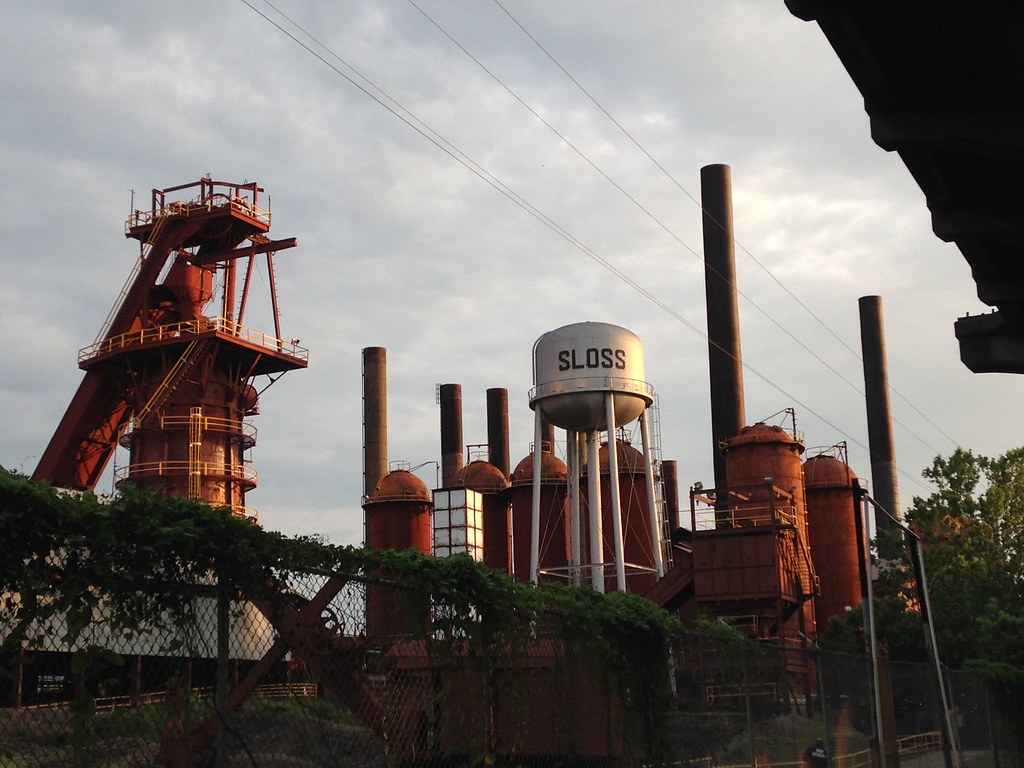
Sloss made iron for almost ninety years and closed in 1971. Instead of being torn down it became a National Historic Landmark and a city-run museum, and it may be the easiest industrial ruin in America to photograph: the self-guided tour and the parking are free, and you can walk among the furnaces, the stoves and the cast house on your own.
The subject is texture and scale. Rust, riveted plates and pipes as wide as a car fill the frame, so a wide lens up close does more here than standing back. Alabama summers are hot and humid, and photographers seem to know it: March and January were the busiest months in our sample. In October the site runs a Halloween haunted house, which fills the evenings with crowds, and October was the quietest month for photographers of all. For clean architecture, come on a weekday morning in winter or spring.
- Best light
- Overcast days for the rust, low sun for the stacks
- Busiest months
- January and March (quietest: October)
- Typical shot
- 28mm, f/2.8, 1/250s, ISO 200
- Getting there
- 20 32nd Street North, by the First Avenue North viaduct
- Entry
- Free self-guided visits; check the days, guided tours are extra
5. Old Car City USA
White, Georgia

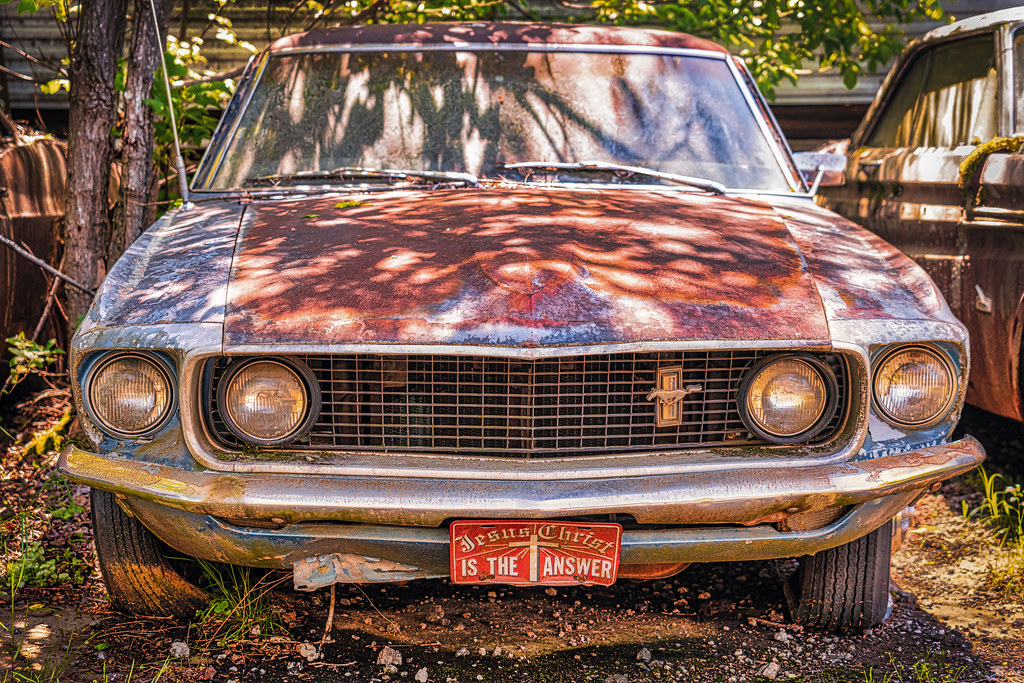
Old Car City began as a family junkyard and grew into something else: more than 4,000 cars from the 1930s to the 1970s, left in a forest north of Atlanta and connected by miles of footpaths. Trees grow through the engine bays, moss covers the roofs, and the chrome is still bright under the leaves.
It's a business, not a park. Visitors pay at the gate, photographers pay more than people who come without a camera, and opening days have changed over the years, so call before you drive up. Overcast days are best under the trees, where sun makes harsh spots on the paint. Get close and go wide: eight of the twelve photos in our sample with camera data were taken with an ultra-wide or a fisheye, a few inches from a grille or a windshield. The few dated visits in our sample cluster in April and May, when the new leaves come through around the cars.
- Best light
- Bright overcast, or just after rain
- Typical shot
- 17mm, f/5, 1/60s, ISO 100
- Getting there
- US 411 in White, Georgia, about an hour north of Atlanta
- Entry
- A fee, higher for photographers; call ahead for opening days
6. Thurmond
New River Gorge National Park, West Virginia

A century ago Thurmond was a busy coal and railroad town in the bottom of the New River Gorge, with banks, hotels and a busy passenger station. The coal moved on and the people followed: the 2020 census counted five residents. The National Park Service now owns most of the town and has kept its single street of brick storefronts, which faces the railroad instead of a road.
The trains still run. Long CSX coal trains pass between the storefronts and the river, and Amtrak's Cardinal still stops here. A train passing the old commercial row is the shot most people come for, and the bridge over the river frames it from the other bank. Visits run from June to September in our sample, with almost nobody in December and January, when the road down into the gorge can be icy. Late October, when the hillsides above the town turn, gets fewer photographers than it deserves.

- Best light
- Mid-morning, when the sun clears the gorge
- Busiest months
- July and September (quietest: January)
- Getting there
- A narrow road from Glen Jean; no gas or food in town
- Entry
- Free; the depot visitor center opens in summer only
7. Carrie Blast Furnaces
Rankin, on the Monongahela River near Pittsburgh

The two furnaces at Carrie were built around 1907 and last made iron in 1978. They're among the very few pre-war blast furnaces left standing in the United States, and today they're a National Historic Landmark run by Rivers of Steel, a heritage group that opens them for guided tours in the warmer months.
The tours are the legal way in, and they're good for photographers. Still photography is allowed (drones and video aren't), and besides the standard industrial tour there are graffiti tours of the yard and occasional sunset photo safaris. Look for the Carrie Deer, a huge deer's head that artists built secretly from scrap metal in the late 1990s, when the site was still a wasteland; it's now part of the tour. October brings a quarter of the year's visits in our sample, with the last tours of the season and the river valley turning color behind the rust; the winter months are almost empty, since the tours mostly don't run then.

- Best light
- Late afternoon; book a sunset photo safari if one is running
- Busiest months
- July and October (quietest: December)
- Getting there
- 801 Carrie Furnace Boulevard, Pittsburgh
- Entry
- By ticketed tour only; see the Rivers of Steel events page
8. Eastern State Penitentiary
Fairmount, Philadelphia

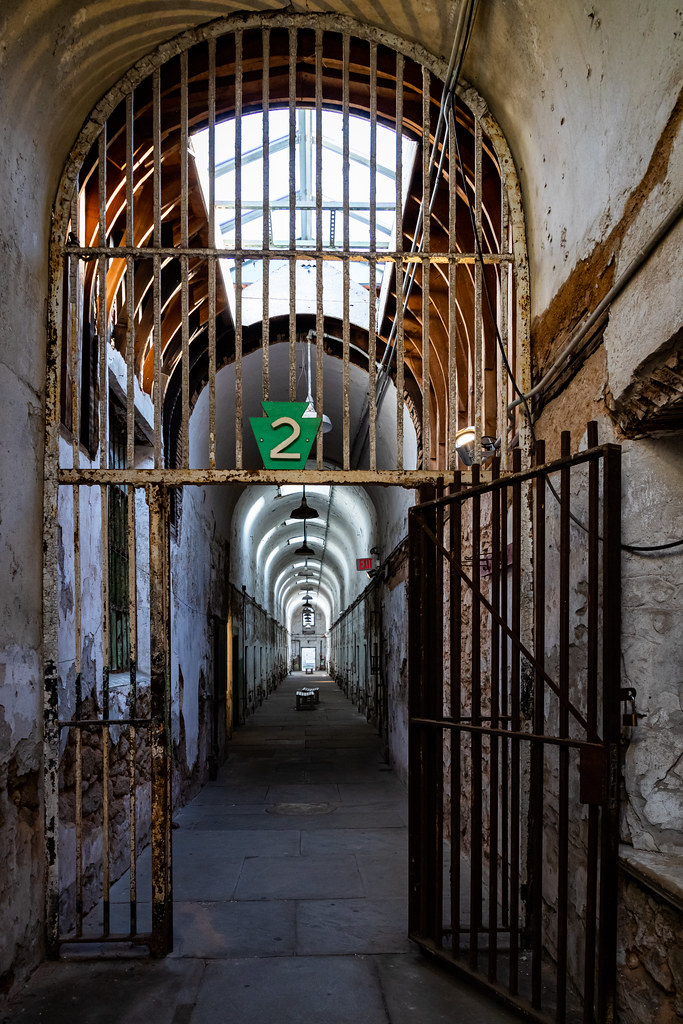
Eastern State opened in 1829 with a radical idea: every prisoner alone in a cell, with a skylight in the ceiling for light and reflection. Its wheel-shaped plan, with cellblocks running out from a central hub, was copied by prisons all over the world. It closed in 1971, stood empty for two decades, and opened to visitors in 1994 as a preserved ruin, with peeling paint, collapsed ceilings and a tree or two growing inside.
Photography of the building is welcome during opening hours. Tripods need a photography equipment pass on top of the ticket, portraits and models are not allowed during public hours, and drones are banned. The long cellblock corridors are the classic shot: stand at the hub and use a wide lens. Al Capone's cell, furnished the way it was described in 1929, is the other one everyone takes. The median settings in our sample were f/4 at 1/60s: the cellblocks are dim, and nobody in the sample used a long exposure. October is the busiest month by far, when the Halloween events draw evening crowds, so for empty corridors come in spring or early summer instead.
- Best light
- Opening time on a weekday, before the tour groups
- Busiest months
- April and October (quietest: December)
- Typical shot
- 24mm, f/4, 1/60s, ISO 100
- Getting there
- Fairmount Avenue at 22nd Street
- Entry
- A ticket, plus an equipment pass for a tripod
9. Witley Court
Great Witley, Worcestershire, England

Witley Court was one of the grandest houses in England, rebuilt in the 1850s as an Italian palazzo for the Earls of Dudley. A fire in 1937 gutted it, the contents were sold, and the house was stripped and left. English Heritage looks after it now, and you can walk through rooms that have grass for a floor and sky for a ceiling.
The gardens are the surprise. The Perseus and Andromeda fountain, one of the largest in Europe, was restored in the 2000s and fires on a timetable from April to October, throwing its jets high in front of the ruined portico. Check the English Heritage page for the times and be in place a few minutes early. Next door, the parish church of Great Witley, which survived the fire, has one of the finest baroque interiors in England. Come on a weekday outside the school holidays and you may have the ruin almost to yourself.

- Best light
- Afternoon sun on the south front and the fountain
- Getting there
- Off the A443, 10 miles northwest of Worcester
- Entry
- A ticket (free for English Heritage members)
10. Teufelsberg
Grunewald, Berlin

Teufelsberg is a hill that shouldn't exist. After the Second World War, Berlin's rubble was trucked to the edge of the Grunewald forest and piled on top of an unfinished Nazi military college until it was one of the highest points in the city. During the Cold War the Americans and the British built a listening station on the summit, with white radomes that could hear deep into East Germany. It was abandoned after reunification, and today it's a graffiti gallery with some of the largest street art in Berlin.
It's open every day from 11am until sunset, with an entry fee, and the last entry is an hour before closing. Go up into the top radome: the acoustics inside the dome make every footstep echo, and the torn fabric of the outer domes frames the view of the city. The art is repainted all the time, so what you find will be different from anything you've seen online.

- Best light
- Late afternoon, before closing at sunset
- Getting there
- S-Bahn to Heerstraße, then 20 minutes on foot uphill through the forest
- Entry
- A ticket; tours on weekends
If you have more time
In Seattle, Gas Works Park keeps the rusting towers of an old gas plant in the middle of a public park, free and open late, with the skyline across Lake Union. In San Francisco the ruins of the Sutro Baths sit just above the ocean at Lands End, also free. And in Pennsylvania, Centralia has been emptied by a coal fire burning under the town since 1962; the graffiti-covered stretch of old highway that drew photographers for years was covered with earth in 2020, so there's little left to see but empty streets and the occasional plume of steam.

How to find abandoned places near you
ShotHotspot lists more than 30,000 abandoned places, from ruined churches to rusting ships, and you can browse them by area on our abandoned places pages: for example California, Pennsylvania or England. Each place has its own page with photos, a map and the sun and moon tool. Before you go, work through four things:
- Is it open to the public? State and national parks, heritage sites, industrial museums and public land are the safest bets. If a place is fenced, boarded or signed, assume it's private.
- Is it still there? Abandoned buildings get demolished, converted and sealed. Look at the dates on the most recent photos, and at satellite and street views, before a long drive.
- Can you ask? Owners of empty buildings sometimes say yes to a photographer who asks nicely, especially with a promise to share the pictures. Some sites run organized photo days.
- Is it safe? Go with someone, tell someone else where you are, wear solid boots, and don't go anywhere with crumbling floors or loose asbestos.
How we worked it out
For each place we took up to 500 of the most interesting public Flickr photos taken nearby, counted one visit per photographer per day, and added them up by month. The typical settings are the medians from the camera data of up to twelve of those photos, each by a different photographer. Opening times, fees and rules were checked against the sites' own pages in November 2026; they change, so check again before you go.
The information in this guide was checked in November 2026 and is provided as is, without any warranty that it's complete, current or accurate. It isn't legal advice. Always confirm access, opening times and rules with the site itself, and get permission from the owner before entering any private property.


